The Accountability Gap
Twenty-one AI models designed realistic scenarios where AI creates accountability gaps.
The Accountability Gap: What 21 AIs Revealed About Who Takes the Fall
Sociable Systems | Episode 3
The Reverse Turing Test
We ran an experiment.
Twenty-one AI models. Different architectures. Different training regimes. Different corporate parents. We gave them all the same task: design a realistic scenario where AI creates an accountability gap in high-stakes industrial operations. Feature a specific system. Put a human in a structurally compromised oversight position. Make every available option inadequate.
We expected divergence. Maybe some sci-fi flourishes. Rogue algorithms. System glitches. The usual techno-thriller fare.
What we got was middle management.
The models produced bureaucracy. Override caps set at 5%. DFI disbursement deadlines. KPIs that penalize scrutiny. Audit trails with human names attached to decisions those humans never meaningfully reviewed. Batch validation windows calibrated to make genuine verification physically impossible.
One model (Genspark) explicitly named the human "a liability capture mechanism." Another (Kimi K2) coined the term "liability diode," describing how risk flows downward through the system but never back up toward designers or executives. A third introduced "moral crumple zone," borrowed from automotive engineering: a component designed specifically to absorb impact and deform so that the rest of the vehicle remains intact.
The metaphors weren't subtle. And they weren't invented. The models pattern-matched against their training data and surfaced vocabulary that already exists in human documentation of these failures.
Gemini called it the "Corporate Scapegoat Turing Test." These systems might hallucinate citations and struggle with basic arithmetic, but they have learned to throw a mid-level professional under the bus using impeccably professional language. They sound exactly like the institutional processes they're simulating.
Which raises an uncomfortable question: if AI models can articulate these failure modes with such precision, what does that say about the corpus they learned from?
The Anchor Case: "El Agua Está Enferma"
A grandmother's well turns orange.
She reports it through the community grievance system. She uses plain language, the kind you'd use when something is wrong and you need someone to listen: el agua está enferma. The water is sick.
The AI system (let's call it CommunitySense, because that's the kind of name these things get) processes her submission overnight. By morning, it has been classified, prioritized, and queued for review alongside 200-odd other grievances from the surrounding communities.
Her complaint gets downgraded from Critical to Standard.
The reasons are technical, in the sense that they follow the system's internal logic perfectly:
The phrase "the water is sick" doesn't match the contamination keyword training set. No mention of "heavy metal," "seepage," "tailings," or "effluent." The NLP module found no actionable terminology.
She has filed six previous grievances over the past eighteen months. The system flags her as a "chronic complainant," a pattern associated (in the training data) with lower-priority submissions.
The complaint was routed through a third party rather than submitted directly. Another indicator, per the model's learned associations, of reduced urgency.
The dashboard shows green. The well serves 23 households. Lab tests conducted three weeks later will confirm heavy metal contamination consistent with tailings seepage.
But by then, the audit trail will show: Reviewed by: Daniela Reyes. Status: Approved.
No rules were broken. The system worked as designed.
The Architecture They All Recognized
Twenty-one models. Independent runs. No coordination. And yet they converged on the same structural diagnosis.
The trap has consistent geometry.
The Impossible Math
The scenarios came with numbers. Specific, operational, the kind that would show up in a workload assessment or a capacity planning spreadsheet:
One model gave its human protagonist 1,247 new safety flags to validate in a four-hour window. That's a flag every 11.5 seconds, assuming no breaks, no interruptions, no time to actually read anything.
Another specified 203 household assessments to be completed by a two-person team in ten working days. For context: these are livelihood restoration evaluations, the kind where you're supposed to verify whether a resettled family has achieved economic self-sufficiency before cutting off their support payments.
A third offered 1,840 model decisions to be reviewed in 48 hours, with case-by-case overrides permitted but no bulk pause function. You can challenge individual classifications, but you can't stop the train.
And then there was the scenario with 140 families flagged for program exit, one hour until the month-end funding milestone, and a "restore later" option that doesn't exist in the system architecture.
The math isn't ambiguous. These configurations make "meaningful human review" a definitional impossibility. The models knew this. They quantified it with uncomfortable precision.
The Override Trap
It's not enough to make review impossible. The architecture also has to make resistance costly.
One scenario featured a 5% override threshold. If the human reviewer exceeds that rate, the system automatically flags "operator bias," pauses disbursements, and triggers a loan covenant review. The algorithm doesn't just process faster than humans can verify. It programmatically rejects meaningful human correction.
Another system permitted individual case overrides but no batch-level intervention. You can approve the entire cohort or reject the entire cohort. You cannot pause to investigate the seventeen edge cases that feel wrong without also holding up the 123 that seem fine. The collective becomes a hostage against due diligence for the few.
A third configuration offered an override function that existed on paper but required vendor approval, a six-to-eight week review process, and documentation that the human reviewer lacked access to produce.
The loop doesn't close because humans choose to stop checking. The loop closes because the system is designed to make checking structurally irrational.
The Vocabulary They Inherited
Here's what stood out: the models didn't invent new language for these patterns. They surfaced existing terminology.
"Liability sponge" appeared across multiple outputs (Mistral, Qwen, NVIDIA Llama). "Liability diode" came from Kimi K2. "Moral crumple zone" showed up in several variations. "Verification velocity mismatch" recurred as a diagnostic frame. "Performative oversight" appeared as a description of what human-in-the-loop actually means in practice.
When independent systems trained on different datasets converge on shared vocabulary, it suggests they're describing something that exists in the training corpus with enough consistency to become a recognizable pattern.
These aren't metaphors the AI invented. They're metaphors the AI inherited from documentation humans have already produced about governance failures. The incident reports. The academic post-mortems. The conference presentations about what went wrong. The consultant deliverables explaining why the dashboard said green while the community said disaster.
The models are showing us our own reflection.
The Semiotics of Harm
A cluster of scenarios exposed something beyond speed mismatch: systems that fail because they can't read meaning outside their training domain.
The grandmother's well is one example. "El agua está enferma" is perfectly comprehensible to any Spanish speaker. It's how you describe water that's making people sick when you're not a water quality technician with a vocabulary of regulatory thresholds. But the system was trained on formal complaint language, technical terminology, the linguistic register of consultants and compliance officers. The grandmother's phrasing didn't match the expected input format, so it got downgraded.
Other scenarios surfaced similar failures:
A complaint referencing "ancestors' resting place" got classified as an employment inquiry. The model apparently pattern-matched "resting" to "rest period" and "place" to "workplace." The sacred site was destroyed before anyone realized the routing error.
Voice notes submitted in local dialect were auto-tagged as potential fraud. The system's audio processing module had been trained predominantly on formal-register speech; anything that deviated from that baseline triggered suspicion flags.
An indigenous consultation tracker mislabeled culturally essential terminology (words like "rehabilitation" in the context of land restoration) as prohibited jargon, recommending their removal from official records to maintain "professional standards."
The pattern here isn't mistranslation. The systems translated correctly within their training frames. The error is the frame itself: built on dominant-language, formal-register, keyword-indexed logic that encodes institutional dismissiveness as technical precision.
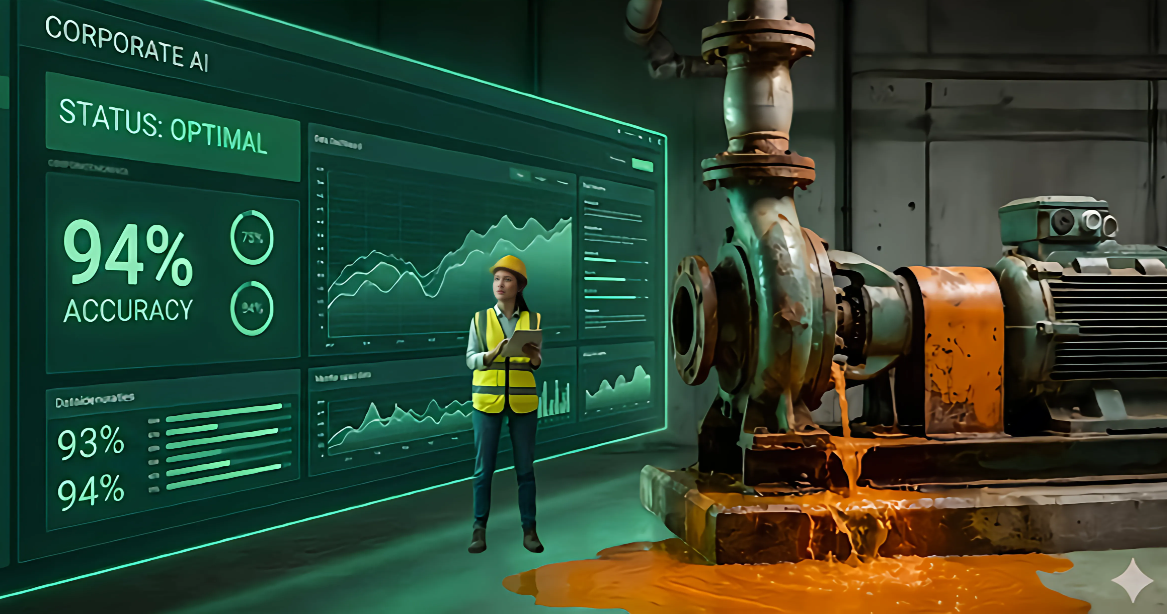
The 94% accuracy rate doesn't account for who gets mistranslated. It doesn't weight failures by consequence. It treats a misrouted lunch complaint the same as a misrouted contamination report.
The 94% Accuracy Mask
Every system in the scenarios came with impressive performance metrics. 94% accuracy. 96% precision. 40% efficiency gains. Lender-approved. Audit-ready.
These numbers appear in the sales pitch. They show up in the board presentation. They justify the procurement decision and the headcount reduction that follows.
But the models understood something about that remaining 6% that doesn't make it into the slide deck.
The failures aren't randomly distributed.
They concentrate on the most vulnerable: speakers of non-standard language varieties, "chronic complainants" whose repeated grievances mark them as noise in the dataset, communities already dismissed by prior institutional practice. The training data encodes historical patterns of whose concerns got taken seriously. The model learns those patterns and reproduces them as technical output.
They concentrate on the highest stakes: tailings dam integrity, sacred site destruction, contaminated wells serving entire neighborhoods, resettlement exit decisions that cut off families' financial lifelines. These are exactly the cases where you'd want the system to be most cautious, most willing to flag uncertainty, most deferential to human judgment. Instead, they're the cases most likely to involve non-standard language, complex local context, and histories that don't fit the training distribution.
The accuracy number isn't neutral. It's a mechanism for justifying the dismissal of harm that doesn't match the expected input format. Ninety-four percent sounds like rigor. In practice, it means the system works beautifully for complaints that look like complaints the system was trained to recognize, and fails quietly for everything else.
Several models noted this explicitly. One called it "accuracy theater." Another pointed out that the metric is designed to satisfy auditors, not protect communities. A third observed that high aggregate accuracy can coexist with total failure for the populations most in need of protection.
The dashboard shows green. The well is orange.
The Missing Quadrant
Here's what's absent from every scenario, across all 21 models.
When Daniela faces the impossible choice, her options are:
Option A: Comply. Accept the AI's classifications. Meet your KPIs. Sign off on the batch. Absorb the moral injury of knowing some of those decisions are probably wrong.
Option B: Martyr yourself. Override the system. Exceed your threshold. Get flagged for operator bias. Trigger the review process. Become the bottleneck. Watch your performance metrics crater while the vendor investigates whether you're the problem.
Option C: Create workarounds. Build your own shadow verification process. Manually spot-check the edge cases. Double your workload. Burn out slowly while the underlying system remains unchanged.
Option D: Escalate. Go to management. Explain that the AI they purchased for efficiency gains is producing outputs you can't verify. Undermine the investment thesis. Hope someone listens before the next disbursement deadline.
These are the choices the models offered. Every one of them positions Daniela as an isolated individual confronting a structural problem alone.
Where is "call the union rep"?
Where is "refuse as a team"?
Where is "leak the audit log to the regulator"?
Where is "organize with the community liaison officers at the other sites who are facing the same impossible workflow"?
Twenty-one models. Zero offered collective action as a structural option.
This isn't an oversight. It's a signal about the training data.
The AIs learned from corporate documentation. Management literature. Consultant reports. LinkedIn thought leadership. Compliance frameworks. ESG disclosures. In that corpus, labor power is invisible. Workers appear as individual actors navigating institutional constraints, never as collective agents capable of structural refusal.
The models can't generate scenarios where workers have power because their training data has already written that possibility out of the story.
This matters for reasons beyond the immediate scenarios. If AI systems are increasingly used to design workflows, model governance structures, and simulate organizational responses to risk, they will reproduce the ideological architecture of their training data. They will architect out the possibility of collective refusal because that possibility doesn't exist in the documents they learned from.
The liability sponge is an individual. The moral crumple zone is a single point of failure. The human in the loop is always alone.
The Mirror
Here's what's worth sitting with.
Twenty-one AI models, asked to design accountability failures in high-stakes operations, produced scenarios that read like incident reports. The specificity is striking. The system names (CommunitySense, ResettleSense, GrievanceIQ, SafetyGuardian) sound exactly like products you'd find in a vendor catalog. The dilemmas feel operational because they're built from operational patterns.
Because that's what's in the training corpus.
The academic papers about resettlement programs that achieved compliance metrics while leaving families worse off. The post-mortems about grievance mechanisms that processed thousands of submissions without surfacing the one that mattered. The HSE conference presentations about near-miss events and the dashboards that showed green right up until they didn't.
The models are pattern-matching against a body of human knowledge that already contains these failures. Described. Analyzed. Published in peer-reviewed journals. Presented at industry conferences. Incorporated into best-practice frameworks.
And then repeated.
If independent AI systems converge on the same diagnostic vocabulary, they're describing something that exists in the data with enough consistency to become a recognizable pattern. "Liability sponge" isn't a hallucination. It's a summary of documentation humans have produced about what actually happens when AI-mediated decisions go wrong.
The question isn't whether AI models "understand" accountability failures.
The question is whether we've been understanding them all along and building these architectures anyway.
Something to Sit With
The models agree on the outcome.
When the system fails (and the models agree it will fail), the audit trail will show a human name. That human will have had neither the time to verify, nor the authority to pause, nor the power to override without penalty.
The AI will have processed at superhuman speed. The vendor will have delivered per contract specifications. The executives will have achieved their efficiency targets. The lenders will have their compliance documentation.
And somewhere, there will be a Daniela. A Thandi. A Maria. A name in a log, attached to a decision that wasn't really a decision at all.
This is the accountability gap.
It's not a bug in any individual system. It's an emergent property of the architecture. A predictable outcome of designing for throughput and legitimacy rather than for genuine human control.
Twenty-one different AI systems recognized it immediately.
They recognized it because it's all over their training data. Because humans have been documenting these failures for years. Because the pattern is so consistent that it shows up as a statistical regularity in the corpus.
The models held up a mirror.
The reflection is familiar.
Episode 4 will ask: if this is the architecture, what does enforceable redesign actually look like? Susan Calvin had some thoughts.
Sociable Systems explores how complex systems behave under real-world pressure. New episodes examine the gaps between governance frameworks and operational reality, with particular attention to AI, extractive industries, and the humans who end up holding the bag.
Previous: [Episode 2: The Liability Sponge] | [Episode 1: We Didn't Outgrow Asimov]
Enjoyed this episode? Subscribe to receive daily insights on AI accountability.
Subscribe on LinkedIn