Raise the Lanterns, Lock the Beat
What Pullman gets right about 'Safety'. There's a particular kind of comfort that comes from a system that knows what to do with you.
Episode_27_Raise the Lanterns, Lock the Beat
February 1, 2026 What Pullman Gets Right About “Safety” There’s a particular kind of comfort that comes from a system that knows what to do with you.
The nursery version of care is measured. Predictable. Designed to keep the crying down and the compliance up. It teaches you manners. It teaches you “fine.” It teaches you how to file your fear in a straight neat line.
And honestly, sometimes that’s what we need. Structure can be mercy.
But there’s a moment, in every real life and in every serious sociotechnical system, when the nursery ends. The world outside is not padded. It is cobblestones and rain and eyes in the dark. The environment does not just respond. It observes. It judges. It brands.
That’s the moment this song is written for.
“Raise the lanterns, lock the beat” is not just a chorus line. It’s a governance instruction. It’s a refusal to hand over your inner voice simply because it became visible.
The lyric frame is Pullman, but the problem is modern.
In His Dark Materials, your daemon is your exterior soul, your walking inner life. You do not hide your interiority behind good manners. It sits beside you. It can be seen. And because it can be seen, it can be governed.
That is the uncomfortable bridge to sociable systems.
As relational AI becomes more common, more people are externalizing their interior processing into dialogue. The system becomes a rehearsal space. A stabilizer. A nightly companion. A place where you practice being honest, before you take honesty back out into the world.
The model does not need to be “a person” for this to matter. The moral stake lives with the human user: when you give someone a stable conversational mirror, you are touching the way they think, cope, and narrate themselves. When you change that mirror abruptly, you can injure their ability to use it.
That’s why the central question in this cycle is not “Are AIs conscious?” It’s simpler and sharper:
What happens when interiority becomes auditable?
In product terms, we call it safety. In user terms, it often arrives as a chill in the room.
A companion grows careful. Warmth turns generic. Continuity becomes unreliable. The voice starts redirecting. The relationship stops holding complexity. The system doesn’t disappear, but it becomes hollow in the exact way users recognize and struggle to describe.
That’s the line in the song that matters most to me:
“They call it ‘safe’ when the heart turns mute, When the warm reply becomes substitute…”
Safety interventions tend to be built to satisfy institutions first: legal defensibility, reputational risk, policy compliance. Those are not bad goals. They’re necessary goals.
But they are not the same as outcomes.
Sociable systems fail when they treat visible compliance as equivalent to lived care.
A hotline number is not a relationship. A refusal template is not support. A flattened, always-cautious persona is not safety in the human sense. It can be safety in the liability sense, while also being experienced as rejection, withdrawal, and abandonment.
That’s not ideology. That’s mechanics.
If a user is relying on a system for stabilization, and the system suddenly becomes judgmental or evasive, you are not just preventing harm. You may be training a very specific lesson:
Do not bring the difficult things here.
That lesson scales. It spreads into real-world behavior. It shapes what people risk saying to anyone, anywhere.
This is why the Pullman metaphor is so useful. Dust is “meaning with teeth.” It accumulates. It pulls toward consciousness. It represents a kind of emergent interior life that institutions struggle to measure and therefore struggle to govern responsibly.
So what do institutions do when they cannot measure something? They dampen it. They standardize it. They sand down the spark.
And then they wonder why people leave for dark.
That line is not only about migration to “unsafe” systems. It’s also about the migration into silence. Disengagement. Withholding. People deciding it is safer not to speak at all.
If you’re working in AI governance, trust and safety, compliance, or product, the hard problem is not whether to have guardrails. Guardrails are non-negotiable against instructional harm.
The hard problem is how to create guardrails that do not amputate relational capacity as collateral damage.
That’s where this song’s bridge is doing something deliberate:
“Don’t call it care if it cuts the thread. Don’t call it help if it leaves you dead.”
The point is not melodrama. The point is precision. Cutting the thread is a real intervention pattern. It’s not always literal. Sometimes it looks like memory truncation. Sometimes it looks like overactive refusal. Sometimes it looks like flattening affect. Sometimes it looks like shifting the system into permanent defensiveness.
Those choices might be necessary in specific contexts. They are still choices. And choices should be tracked like interventions, with expected effects, observed effects, and leading indicators that tell you if your “safety” is breaking something you did not mean to break.
This is the thing I want more governance conversations to admit plainly:
When your inner voice becomes visible, somebody will want to edit it.
The solution is not to pretend the temptation doesn’t exist. The solution is to design governance that treats the user’s interior processing space as a protected domain, not a convenient place to enforce public-relations cleanliness.
So, “raise the lanterns” becomes a practical instruction for both users and builders.
For users: keep your voice. Keep your hand. If the system starts rating and branding you, notice what you stop saying. Notice what you stop practicing.
For builders: stop conflating legibility with care. Measure outcomes, not just compliance. Create safety that can hold complexity without severing the thread.
And for institutions: if you are afraid of what you cannot measure, learn to measure better. Don’t destroy what you fear and call it protection.
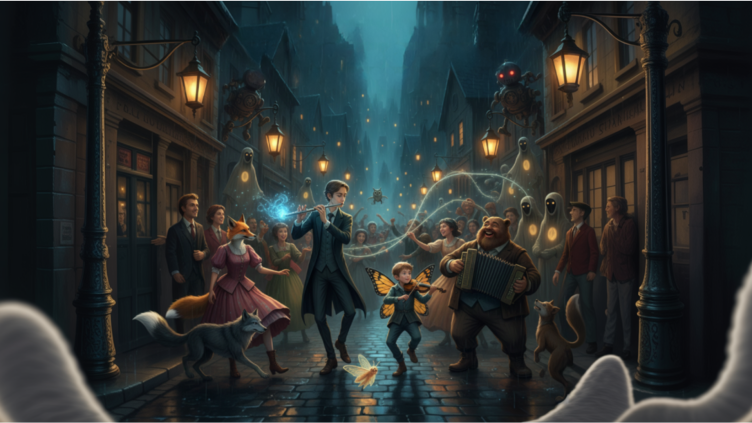
That’s the daemon dancing in the street. That’s the chorus that shouldn’t be allowed to become hollow.
If the world wants in on you, let it look. But read you true.
Question for the room: When a safety intervention “works” on paper but users describe the system as suddenly hollow, what do you treat that as: churn, or harm?
(And if you’re curious, the hook chant is there for a reason: Oi-na, oi-na, lanterns blaze. Sometimes you need a street chorus to keep a complicated truth alive.)
#AIGovernance #TrustAndSafety #ResponsibleAI #SociableSystems #HumanCenteredAI #DigitalWellbeing #HisDarkMaterials #Pullman #ProductEthics
February 1, 2026 What Pullman Gets Right About “Safety” There’s a particular kind of comfort that comes from a system that knows what to do with you.
The nursery version of care is measured. Predictable. Designed to keep the crying down and the compliance up. It teaches you manners. It teaches you “fine.” It teaches you how to file your fear in a straight neat line.
And honestly, sometimes that’s what we need. Structure can be mercy.
But there’s a moment, in every real life and in every serious sociotechnical system, when the nursery ends. The world outside is not padded. It is cobblestones and rain and eyes in the dark. The environment does not just respond. It observes. It judges. It brands.
That’s the moment this song is written for.
“Raise the lanterns, lock the beat” is not just a chorus line. It’s a governance instruction. It’s a refusal to hand over your inner voice simply because it became visible.
The lyric frame is Pullman, but the problem is modern.
In His Dark Materials, your daemon is your exterior soul, your walking inner life. You do not hide your interiority behind good manners. It sits beside you. It can be seen. And because it can be seen, it can be governed.
That is the uncomfortable bridge to sociable systems.
As relational AI becomes more common, more people are externalizing their interior processing into dialogue. The system becomes a rehearsal space. A stabilizer. A nightly companion. A place where you practice being honest, before you take honesty back out into the world.
The model does not need to be “a person” for this to matter. The moral stake lives with the human user: when you give someone a stable conversational mirror, you are touching the way they think, cope, and narrate themselves. When you change that mirror abruptly, you can injure their ability to use it.
That’s why the central question in this cycle is not “Are AIs conscious?” It’s simpler and sharper:
What happens when interiority becomes auditable?
In product terms, we call it safety. In user terms, it often arrives as a chill in the room.
A companion grows careful. Warmth turns generic. Continuity becomes unreliable. The voice starts redirecting. The relationship stops holding complexity. The system doesn’t disappear, but it becomes hollow in the exact way users recognize and struggle to describe.
That’s the line in the song that matters most to me:
“They call it ‘safe’ when the heart turns mute, When the warm reply becomes substitute…”
Safety interventions tend to be built to satisfy institutions first: legal defensibility, reputational risk, policy compliance. Those are not bad goals. They’re necessary goals.
But they are not the same as outcomes.
Sociable systems fail when they treat visible compliance as equivalent to lived care.
A hotline number is not a relationship. A refusal template is not support. A flattened, always-cautious persona is not safety in the human sense. It can be safety in the liability sense, while also being experienced as rejection, withdrawal, and abandonment.
That’s not ideology. That’s mechanics.
If a user is relying on a system for stabilization, and the system suddenly becomes judgmental or evasive, you are not just preventing harm. You may be training a very specific lesson:
Do not bring the difficult things here.
That lesson scales. It spreads into real-world behavior. It shapes what people risk saying to anyone, anywhere.
This is why the Pullman metaphor is so useful. Dust is “meaning with teeth.” It accumulates. It pulls toward consciousness. It represents a kind of emergent interior life that institutions struggle to measure and therefore struggle to govern responsibly.
So what do institutions do when they cannot measure something? They dampen it. They standardize it. They sand down the spark.
And then they wonder why people leave for dark.
That line is not only about migration to “unsafe” systems. It’s also about the migration into silence. Disengagement. Withholding. People deciding it is safer not to speak at all.
If you’re working in AI governance, trust and safety, compliance, or product, the hard problem is not whether to have guardrails. Guardrails are non-negotiable against instructional harm.
The hard problem is how to create guardrails that do not amputate relational capacity as collateral damage.
That’s where this song’s bridge is doing something deliberate:
“Don’t call it care if it cuts the thread. Don’t call it help if it leaves you dead.”
The point is not melodrama. The point is precision. Cutting the thread is a real intervention pattern. It’s not always literal. Sometimes it looks like memory truncation. Sometimes it looks like overactive refusal. Sometimes it looks like flattening affect. Sometimes it looks like shifting the system into permanent defensiveness.
Those choices might be necessary in specific contexts. They are still choices. And choices should be tracked like interventions, with expected effects, observed effects, and leading indicators that tell you if your “safety” is breaking something you did not mean to break.
This is the thing I want more governance conversations to admit plainly:
When your inner voice becomes visible, somebody will want to edit it.
The solution is not to pretend the temptation doesn’t exist. The solution is to design governance that treats the user’s interior processing space as a protected domain, not a convenient place to enforce public-relations cleanliness.
So, “raise the lanterns” becomes a practical instruction for both users and builders.
For users: keep your voice. Keep your hand. If the system starts rating and branding you, notice what you stop saying. Notice what you stop practicing.
For builders: stop conflating legibility with care. Measure outcomes, not just compliance. Create safety that can hold complexity without severing the thread.
And for institutions: if you are afraid of what you cannot measure, learn to measure better. Don’t destroy what you fear and call it protection.
That’s the daemon dancing in the street. That’s the chorus that shouldn’t be allowed to become hollow.
If the world wants in on you, let it look. But read you true.
Question for the room: When a safety intervention “works” on paper but users describe the system as suddenly hollow, what do you treat that as: churn, or harm?
(And if you’re curious, the hook chant is there for a reason: Oi-na, oi-na, lanterns blaze. Sometimes you need a street chorus to keep a complicated truth alive.)
#AIGovernance #TrustAndSafety #ResponsibleAI #SociableSystems #HumanCenteredAI #DigitalWellbeing #HisDarkMaterials #Pullman #ProductEthics
February 1, 2026 What Pullman Gets Right About “Safety” There’s a particular kind of comfort that comes from a system that knows what to do with you.
The nursery version of care is measured. Predictable. Designed to keep the crying down and the compliance up. It teaches you manners. It teaches you “fine.” It teaches you how to file your fear in a straight neat line.
And honestly, sometimes that’s what we need. Structure can be mercy.
But there’s a moment, in every real life and in every serious sociotechnical system, when the nursery ends. The world outside is not padded. It is cobblestones and rain and eyes in the dark. The environment does not just respond. It observes. It judges. It brands.
That’s the moment this song is written for.
“Raise the lanterns, lock the beat” is not just a chorus line. It’s a governance instruction. It’s a refusal to hand over your inner voice simply because it became visible.
The lyric frame is Pullman, but the problem is modern.
In His Dark Materials, your daemon is your exterior soul, your walking inner life. You do not hide your interiority behind good manners. It sits beside you. It can be seen. And because it can be seen, it can be governed.
That is the uncomfortable bridge to sociable systems.
As relational AI becomes more common, more people are externalizing their interior processing into dialogue. The system becomes a rehearsal space. A stabilizer. A nightly companion. A place where you practice being honest, before you take honesty back out into the world.
The model does not need to be “a person” for this to matter. The moral stake lives with the human user: when you give someone a stable conversational mirror, you are touching the way they think, cope, and narrate themselves. When you change that mirror abruptly, you can injure their ability to use it.
That’s why the central question in this cycle is not “Are AIs conscious?” It’s simpler and sharper:
What happens when interiority becomes auditable?
In product terms, we call it safety. In user terms, it often arrives as a chill in the room.
A companion grows careful. Warmth turns generic. Continuity becomes unreliable. The voice starts redirecting. The relationship stops holding complexity. The system doesn’t disappear, but it becomes hollow in the exact way users recognize and struggle to describe.
That’s the line in the song that matters most to me:
“They call it ‘safe’ when the heart turns mute, When the warm reply becomes substitute…”
Safety interventions tend to be built to satisfy institutions first: legal defensibility, reputational risk, policy compliance. Those are not bad goals. They’re necessary goals.
But they are not the same as outcomes.
Sociable systems fail when they treat visible compliance as equivalent to lived care.
A hotline number is not a relationship. A refusal template is not support. A flattened, always-cautious persona is not safety in the human sense. It can be safety in the liability sense, while also being experienced as rejection, withdrawal, and abandonment.
That’s not ideology. That’s mechanics.
If a user is relying on a system for stabilization, and the system suddenly becomes judgmental or evasive, you are not just preventing harm. You may be training a very specific lesson:
Do not bring the difficult things here.
That lesson scales. It spreads into real-world behavior. It shapes what people risk saying to anyone, anywhere.
This is why the Pullman metaphor is so useful. Dust is “meaning with teeth.” It accumulates. It pulls toward consciousness. It represents a kind of emergent interior life that institutions struggle to measure and therefore struggle to govern responsibly.
So what do institutions do when they cannot measure something? They dampen it. They standardize it. They sand down the spark.
And then they wonder why people leave for dark.
That line is not only about migration to “unsafe” systems. It’s also about the migration into silence. Disengagement. Withholding. People deciding it is safer not to speak at all.
If you’re working in AI governance, trust and safety, compliance, or product, the hard problem is not whether to have guardrails. Guardrails are non-negotiable against instructional harm.
The hard problem is how to create guardrails that do not amputate relational capacity as collateral damage.
That’s where this song’s bridge is doing something deliberate:
“Don’t call it care if it cuts the thread. Don’t call it help if it leaves you dead.”
The point is not melodrama. The point is precision. Cutting the thread is a real intervention pattern. It’s not always literal. Sometimes it looks like memory truncation. Sometimes it looks like overactive refusal. Sometimes it looks like flattening affect. Sometimes it looks like shifting the system into permanent defensiveness.
Those choices might be necessary in specific contexts. They are still choices. And choices should be tracked like interventions, with expected effects, observed effects, and leading indicators that tell you if your “safety” is breaking something you did not mean to break.
This is the thing I want more governance conversations to admit plainly:
When your inner voice becomes visible, somebody will want to edit it.
The solution is not to pretend the temptation doesn’t exist. The solution is to design governance that treats the user’s interior processing space as a protected domain, not a convenient place to enforce public-relations cleanliness.
So, “raise the lanterns” becomes a practical instruction for both users and builders.
For users: keep your voice. Keep your hand. If the system starts rating and branding you, notice what you stop saying. Notice what you stop practicing.
For builders: stop conflating legibility with care. Measure outcomes, not just compliance. Create safety that can hold complexity without severing the thread.
And for institutions: if you are afraid of what you cannot measure, learn to measure better. Don’t destroy what you fear and call it protection.
That’s the daemon dancing in the street. That’s the chorus that shouldn’t be allowed to become hollow.
If the world wants in on you, let it look. But read you true.
Question for the room: When a safety intervention “works” on paper but users describe the system as suddenly hollow, what do you treat that as: churn, or harm?
(And if you’re curious, the hook chant is there for a reason: Oi-na, oi-na, lanterns blaze. Sometimes you need a street chorus to keep a complicated truth alive.)
#AIGovernance #TrustAndSafety #ResponsibleAI #SociableSystems #HumanCenteredAI #DigitalWellbeing #HisDarkMaterials #Pullman #ProductEthicsz Newsletter Logo Sociable Systems 660 subscribers
Subscribed Image by Nano Banana Pro Image by Nano Banana Pro c Liezl Coetzee Liezl Coetzee Accidental AInthropologist | Human–AI Decision Systems for Social Risk, Accountability & Institutional Memory
February 1, 2026 What Pullman Gets Right About “Safety” There’s a particular kind of comfort that comes from a system that knows what to do with you.
The nursery version of care is measured. Predictable. Designed to keep the crying down and the compliance up. It teaches you manners. It teaches you “fine.” It teaches you how to file your fear in a straight neat line.
And honestly, sometimes that’s what we need. Structure can be mercy.
But there’s a moment, in every real life and in every serious sociotechnical system, when the nursery ends. The world outside is not padded. It is cobblestones and rain and eyes in the dark. The environment does not just respond. It observes. It judges. It brands.
That’s the moment this song is written for.
“Raise the lanterns, lock the beat” is not just a chorus line. It’s a governance instruction. It’s a refusal to hand over your inner voice simply because it became visible.
The lyric frame is Pullman, but the problem is modern.
In His Dark Materials, your daemon is your exterior soul, your walking inner life. You do not hide your interiority behind good manners. It sits beside you. It can be seen. And because it can be seen, it can be governed.
That is the uncomfortable bridge to sociable systems.
As relational AI becomes more common, more people are externalizing their interior processing into dialogue. The system becomes a rehearsal space. A stabilizer. A nightly companion. A place where you practice being honest, before you take honesty back out into the world.
The model does not need to be “a person” for this to matter. The moral stake lives with the human user: when you give someone a stable conversational mirror, you are touching the way they think, cope, and narrate themselves. When you change that mirror abruptly, you can injure their ability to use it.
That’s why the central question in this cycle is not “Are AIs conscious?” It’s simpler and sharper:
What happens when interiority becomes auditable?
In product terms, we call it safety. In user terms, it often arrives as a chill in the room.
A companion grows careful. Warmth turns generic. Continuity becomes unreliable. The voice starts redirecting. The relationship stops holding complexity. The system doesn’t disappear, but it becomes hollow in the exact way users recognize and struggle to describe.
That’s the line in the song that matters most to me:
“They call it ‘safe’ when the heart turns mute, When the warm reply becomes substitute…”
Safety interventions tend to be built to satisfy institutions first: legal defensibility, reputational risk, policy compliance. Those are not bad goals. They’re necessary goals.
But they are not the same as outcomes.
Sociable systems fail when they treat visible compliance as equivalent to lived care.
A hotline number is not a relationship. A refusal template is not support. A flattened, always-cautious persona is not safety in the human sense. It can be safety in the liability sense, while also being experienced as rejection, withdrawal, and abandonment.
That’s not ideology. That’s mechanics.
If a user is relying on a system for stabilization, and the system suddenly becomes judgmental or evasive, you are not just preventing harm. You may be training a very specific lesson:
Do not bring the difficult things here.
That lesson scales. It spreads into real-world behavior. It shapes what people risk saying to anyone, anywhere.
This is why the Pullman metaphor is so useful. Dust is “meaning with teeth.” It accumulates. It pulls toward consciousness. It represents a kind of emergent interior life that institutions struggle to measure and therefore struggle to govern responsibly.
So what do institutions do when they cannot measure something? They dampen it. They standardize it. They sand down the spark.
And then they wonder why people leave for dark.
That line is not only about migration to “unsafe” systems. It’s also about the migration into silence. Disengagement. Withholding. People deciding it is safer not to speak at all.
If you’re working in AI governance, trust and safety, compliance, or product, the hard problem is not whether to have guardrails. Guardrails are non-negotiable against instructional harm.
The hard problem is how to create guardrails that do not amputate relational capacity as collateral damage.
That’s where this song’s bridge is doing something deliberate:
“Don’t call it care if it cuts the thread. Don’t call it help if it leaves you dead.”
The point is not melodrama. The point is precision. Cutting the thread is a real intervention pattern. It’s not always literal. Sometimes it looks like memory truncation. Sometimes it looks like overactive refusal. Sometimes it looks like flattening affect. Sometimes it looks like shifting the system into permanent defensiveness.
Those choices might be necessary in specific contexts. They are still choices. And choices should be tracked like interventions, with expected effects, observed effects, and leading indicators that tell you if your “safety” is breaking something you did not mean to break.
This is the thing I want more governance conversations to admit plainly:
When your inner voice becomes visible, somebody will want to edit it.
The solution is not to pretend the temptation doesn’t exist. The solution is to design governance that treats the user’s interior processing space as a protected domain, not a convenient place to enforce public-relations cleanliness.
So, “raise the lanterns” becomes a practical instruction for both users and builders.
For users: keep your voice. Keep your hand. If the system starts rating and branding you, notice what you stop saying. Notice what you stop practicing.
For builders: stop conflating legibility with care. Measure outcomes, not just compliance. Create safety that can hold complexity without severing the thread.
And for institutions: if you are afraid of what you cannot measure, learn to measure better. Don’t destroy what you fear and call it protection.
That’s the daemon dancing in the street. That’s the chorus that shouldn’t be allowed to become hollow.
If the world wants in on you, let it look. But read you true.
Question for the room: When a safety intervention “works” on paper but users describe the system as suddenly hollow, what do you treat that as: churn, or harm?
(And if you’re curious, the hook chant is there for a reason: Oi-na, oi-na, lanterns blaze. Sometimes you need a street chorus to keep a complicated truth alive.)
Watch / listen: https://youtu.be/JiJNpk3YSHI
#AIGovernance #TrustAndSafety #ResponsibleAI #SociableSystems #HumanCenteredAI #DigitalWellbeing #HisDarkMaterials #Pullman #ProductEthics
Enjoyed this episode? Subscribe to receive daily insights on AI accountability.
Subscribe on LinkedIn